

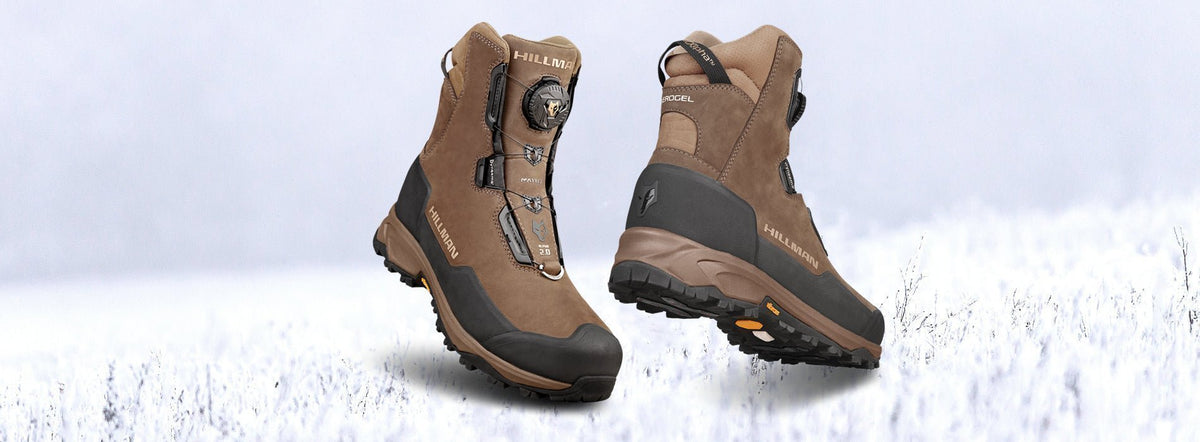
The best hunting boots are the ones built for the way you hunt. Sit in a treestand on cold mornings and you need warmth. Walk all day and you need a light, waterproof boot with ankle support. Hunt wet ground and the boot has to keep water out. Start with our hunting boots for men, then narrow it down below.

Which hunting boots fit which hunt?
Most hunters don't need the warmest boot or the lightest one. They need the right one for the hunt they do most. Here's a quick way to sort it out.
| The hunt | What matters most | Insulation | Height | Where to look |
|---|---|---|---|---|
| Late-season treestand or ground blind | Warmth while you sit still for hours | Heavy | Tall | insulated hunting boots |
| Early-season whitetail | Staying dry without sweating | None or light | Mid to tall | waterproof hunting boots |
| Spot and stalk in the mountains | Ankle support and grip on rock | Light, more as the season gets colder | Tall | A supportive leather boot with a stiff sole |
| Elk | Support under a heavy pack | Light early, more in late season | Tall | A supportive leather boot with a stiff sole |
| Upland birds behind dogs | Light weight over a lot of ground | None or light | Mid | A light, waterproof boot |
| Swamps and flooded timber | Keeping water out above the ankle | Depends on the month | Knee-high | Rubber knee boots |
| Any hunt, if your feet are wide | Room in the toes without sizing up | As the hunt needs | As the hunt needs | wide hunting boots |
How do you choose hunting boots?
Pick in this order: how warm, how waterproof, how tall, how heavy, what sole, and how it fits. Get the first two wrong and nothing else saves the day.
Insulation: match it to how much you move
Insulation is about how much you move, not just the forecast. A boot made for long sits in the snow will soak your socks with sweat on a long walk in. If you hunt cold season mornings from a stand, go warm. If you cover miles, go light or skip insulation and let thick socks do the work. Our post comparing aerogel, Thinsulate, and PrimaLoft explains how the main fills differ.

Waterproofing: a membrane or rubber
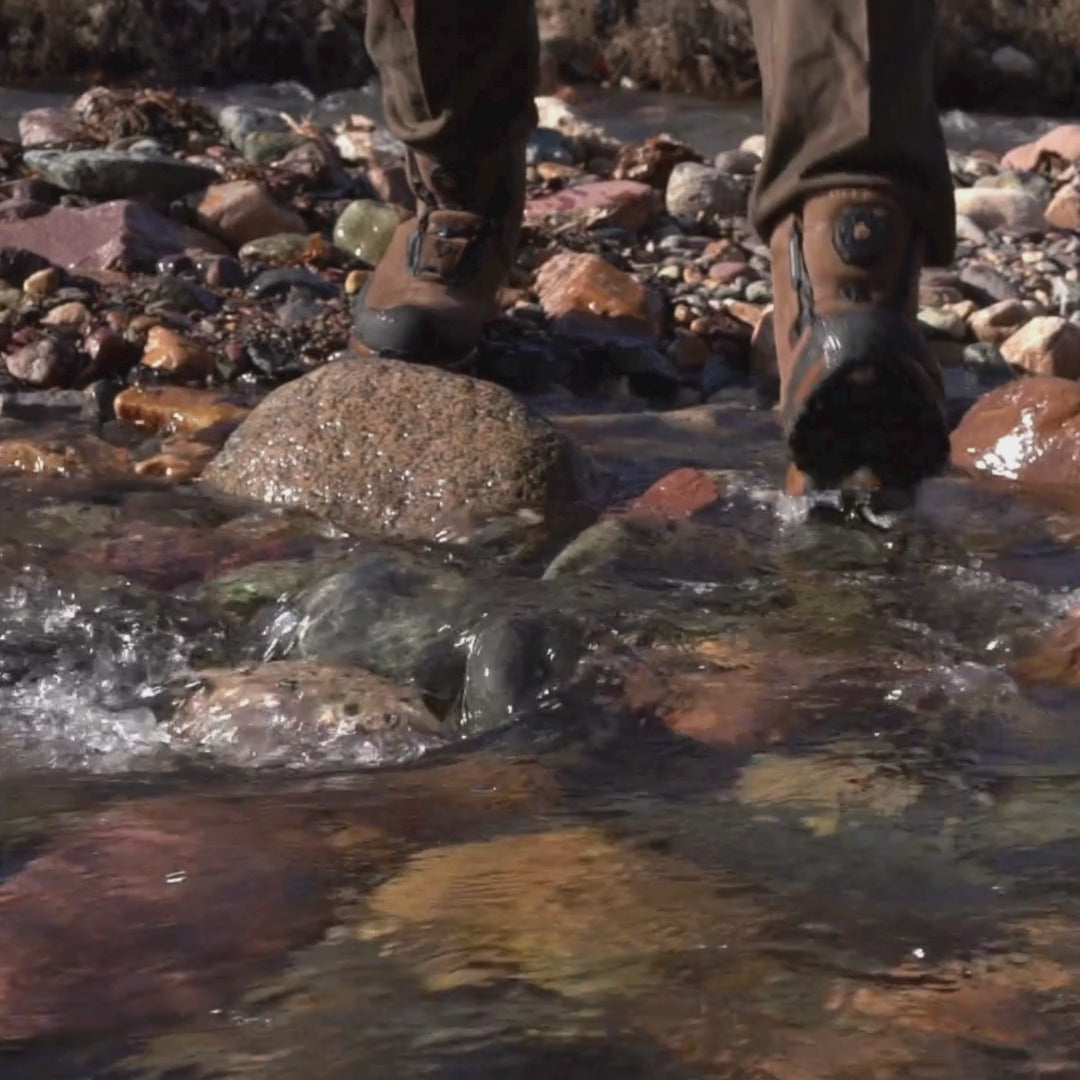
Leather boots with a waterproof membrane keep rain, dew, and wet grass out and still let sweat escape. They're the choice for walking hunts. Rubber keeps out standing water and mud better than anything, but it doesn't breathe, so it fits short walks and wet ground better than long climbs.
Height: tall for support, shorter for miles
A tall shaft supports your ankles on side hills, keeps snow out, and lets you cross a shallow creek. A mid-height boot feels lighter and cooler on warm days. If you're not sure, go tall for anything off trail.
Weight: every ounce counts on a long day
You lift your boots thousands of times on a hunt. A lighter pair means fresher legs on the walk out and more comfort for long hours when you're far from the truck. Weight matters less when you walk a short way to a stand and sit.
Sole and grip
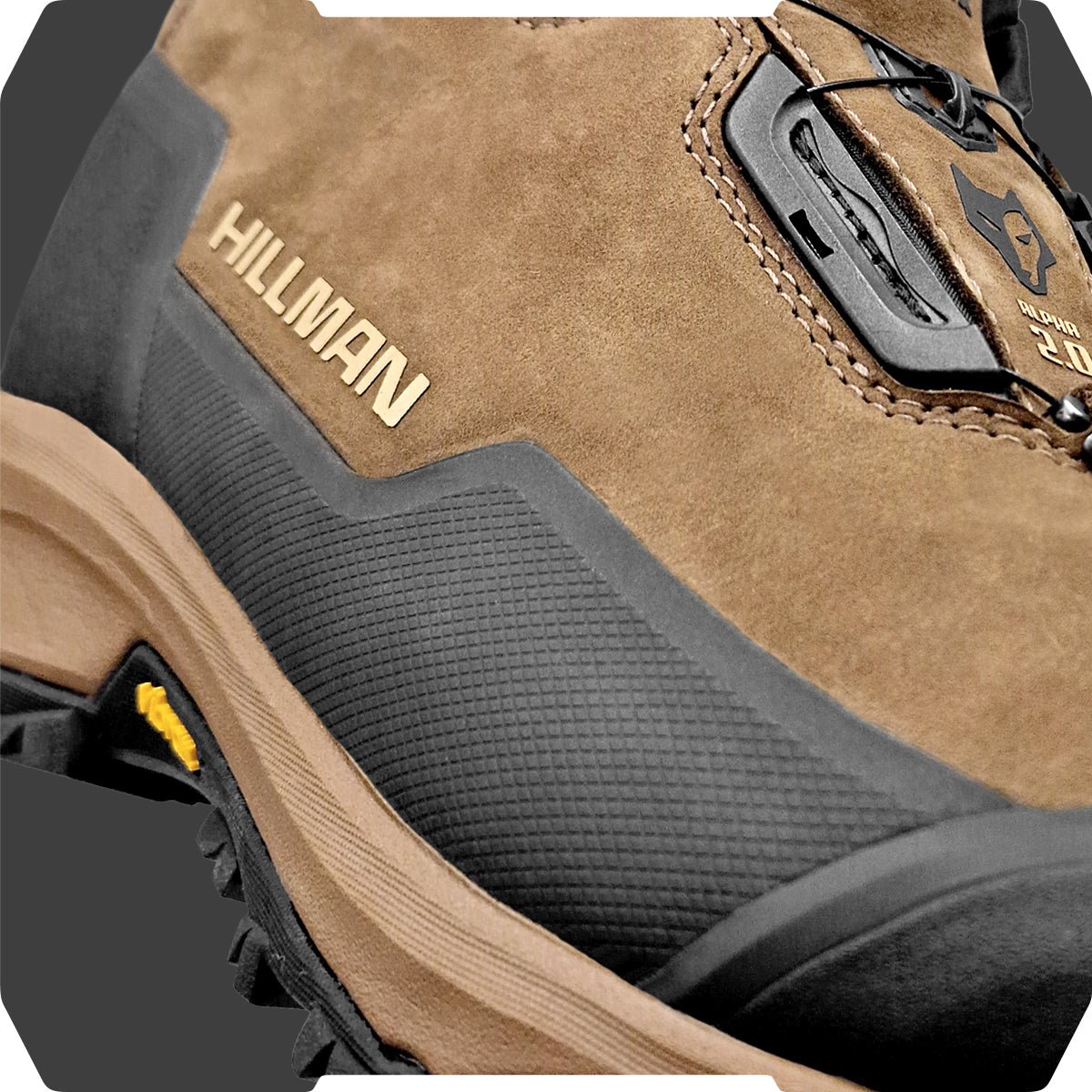
Deep lugs bite into mud and shed it. Softer rubber grips wet rock and logs. A stiffer sole helps on steep ground and under a pack, while a softer one feels quieter and more natural on flat ground.
Fit and width
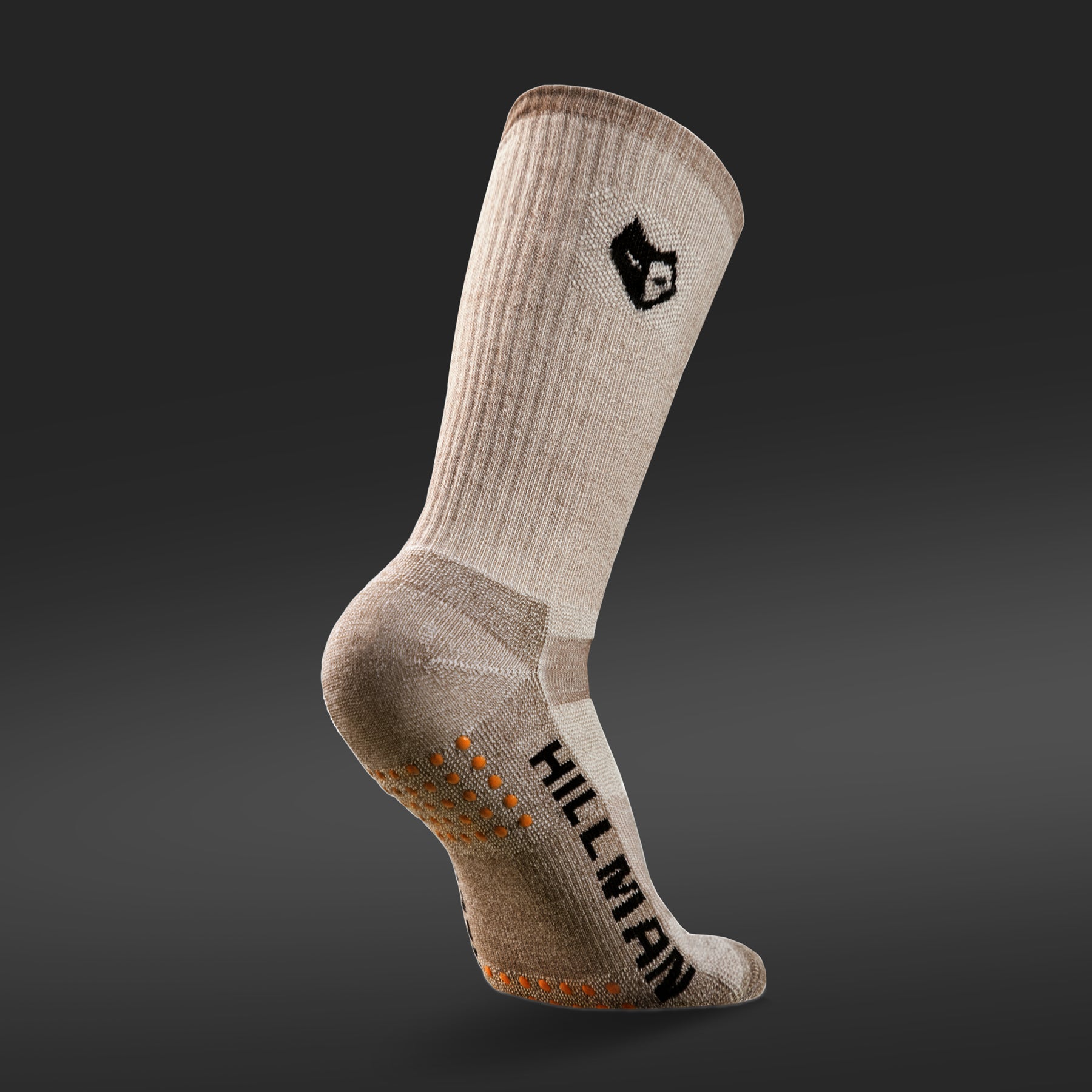
Try boots on in the afternoon, with the socks you hunt in. Your heel should stay put when you walk uphill, and your toes shouldn't hit the front when you walk downhill. If the boot only fits once you size up, look at wide hunting boots instead. Buying from a European size chart? Use our EU to US sizing guide. And break in a new pair before opening day, not on it.
Still wondering whether your hiking boots will do? Read our post on hunting boots vs. hiking boots.
Who makes the best hunting boots?

Ask around camp and you'll hear the same names, each tied to a kind of country.
When you spend enough time outdoors, you start to see how each brand has earned its place in hunting. In the steep mountains, hunters often talk about Crispi or Kenetrek boots, known for toughness and long-lasting performance on rocky slopes. In the wetlands and flooded timber, LaCrosse and Muck have become trusted names, keeping feet dry during long sits in tough conditions. For active stalks and bird hunts, Irish Setter and Danner often come up, praised for lighter designs that bring comfort over long days in the field.

Each of these brands earned its name on certain ground. The best brand for you is the one whose boots were built for the ground you hunt, so start with the hunt, then check the fit, not the logo. At Hillman, we see them as fellow travelers - different paths, same purpose.
Where do Hillman boots fit?

Our boots come in two kinds, and both come in regular and wide widths.
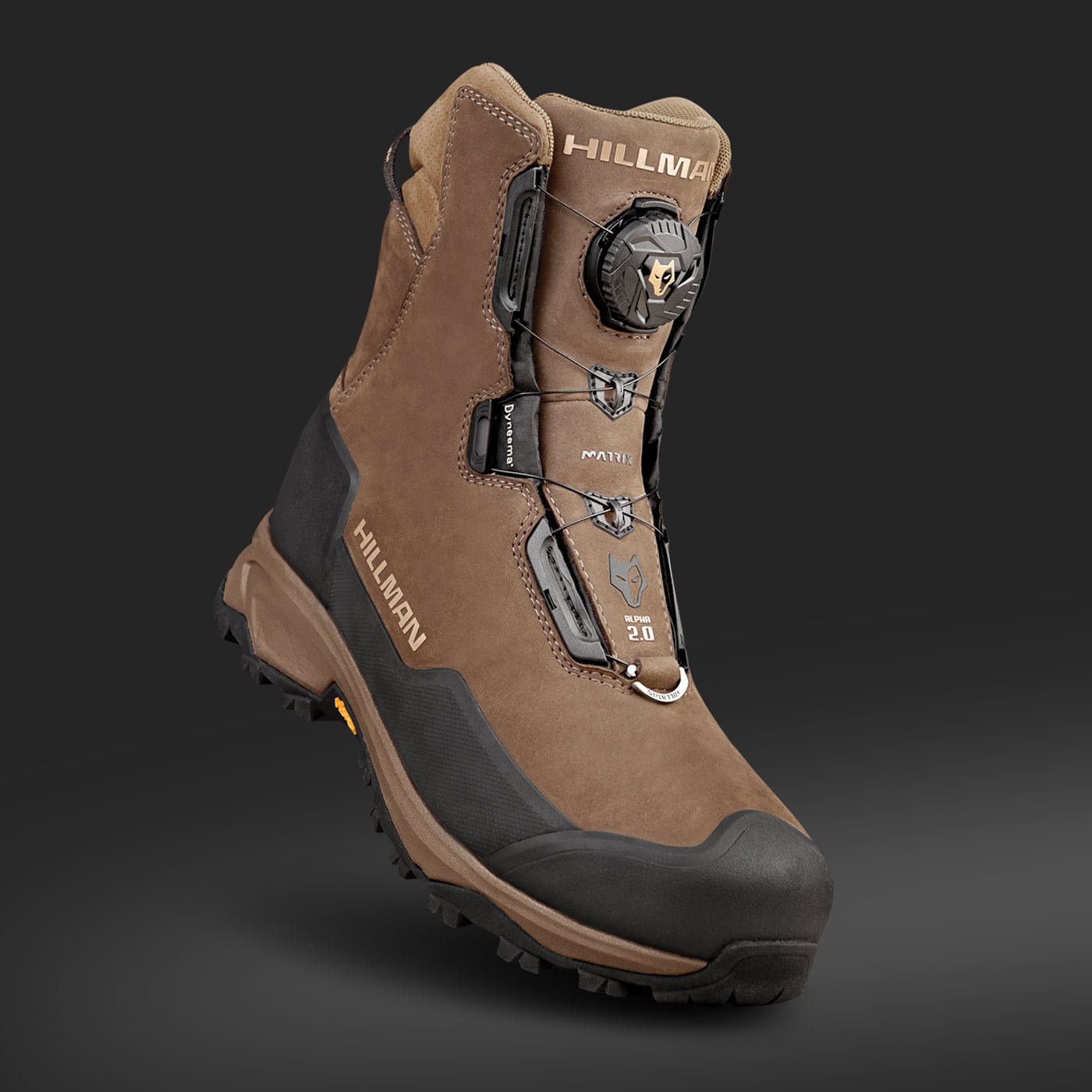
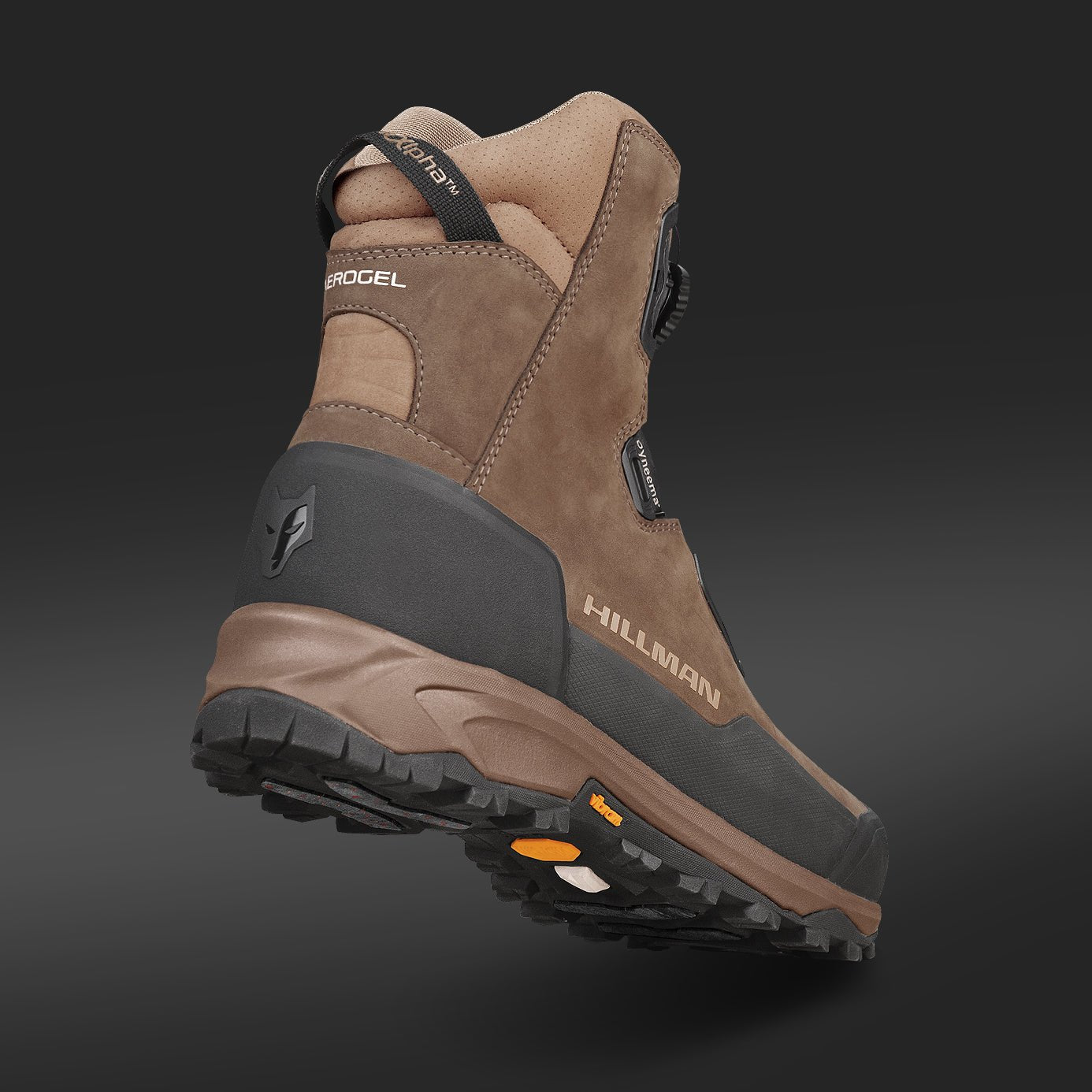
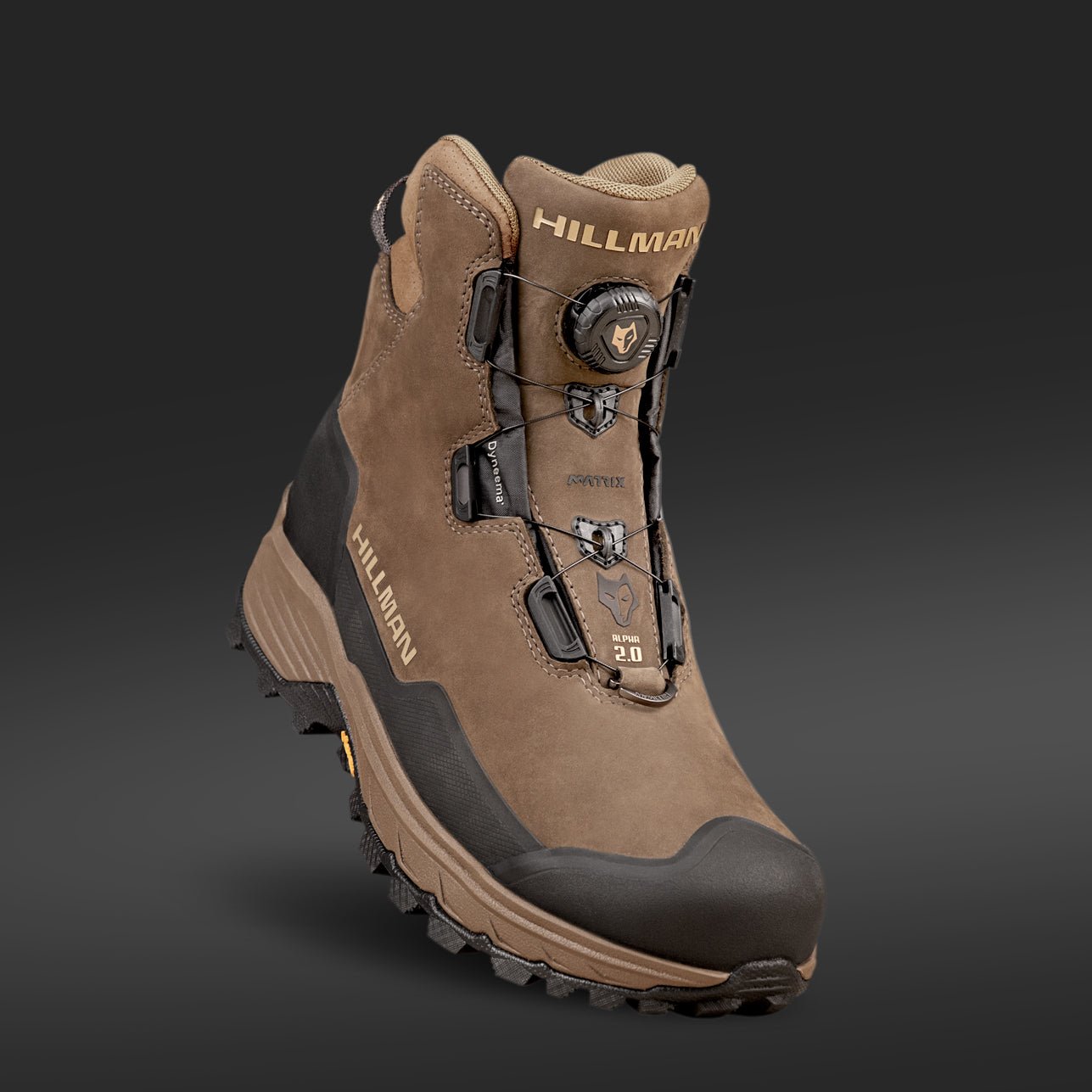
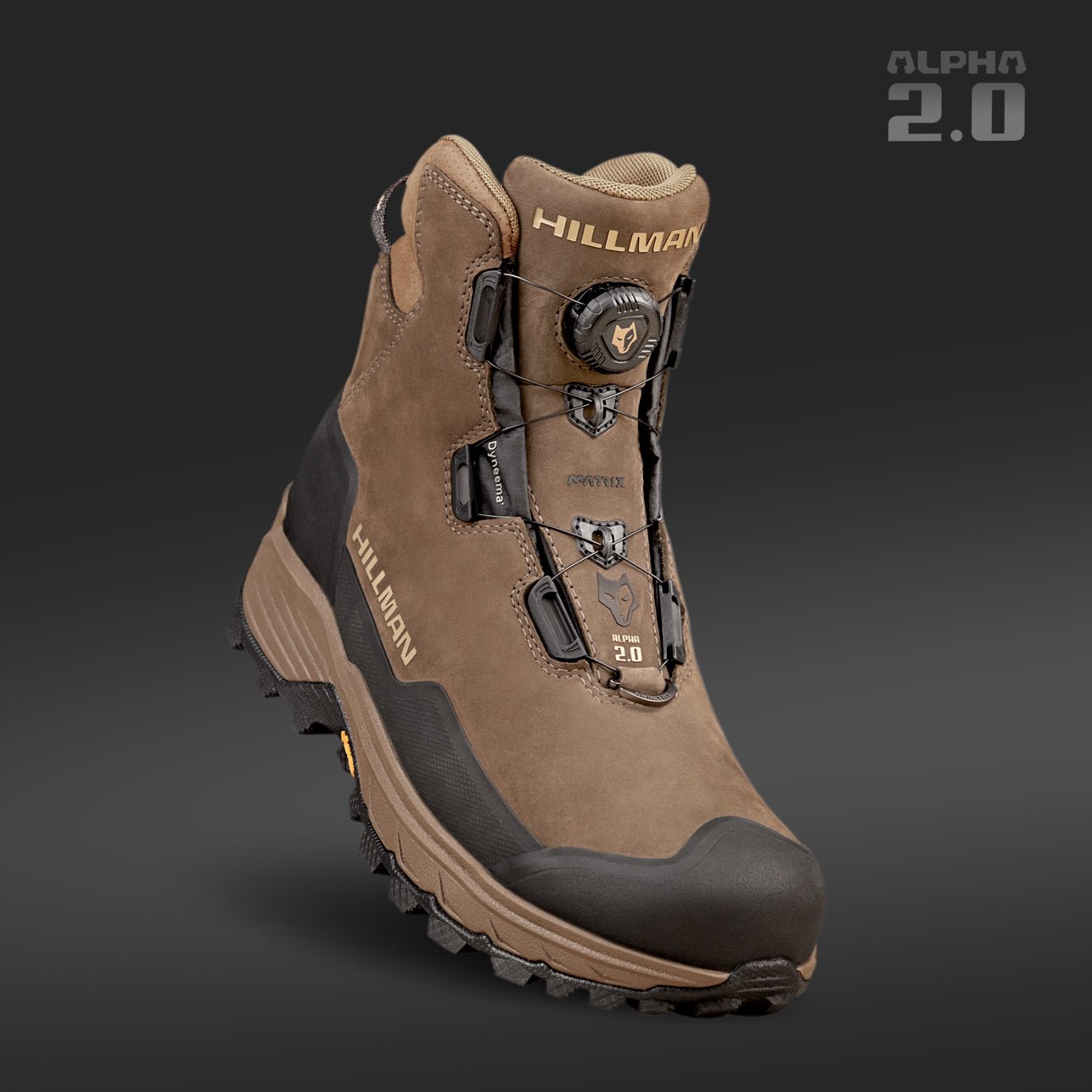
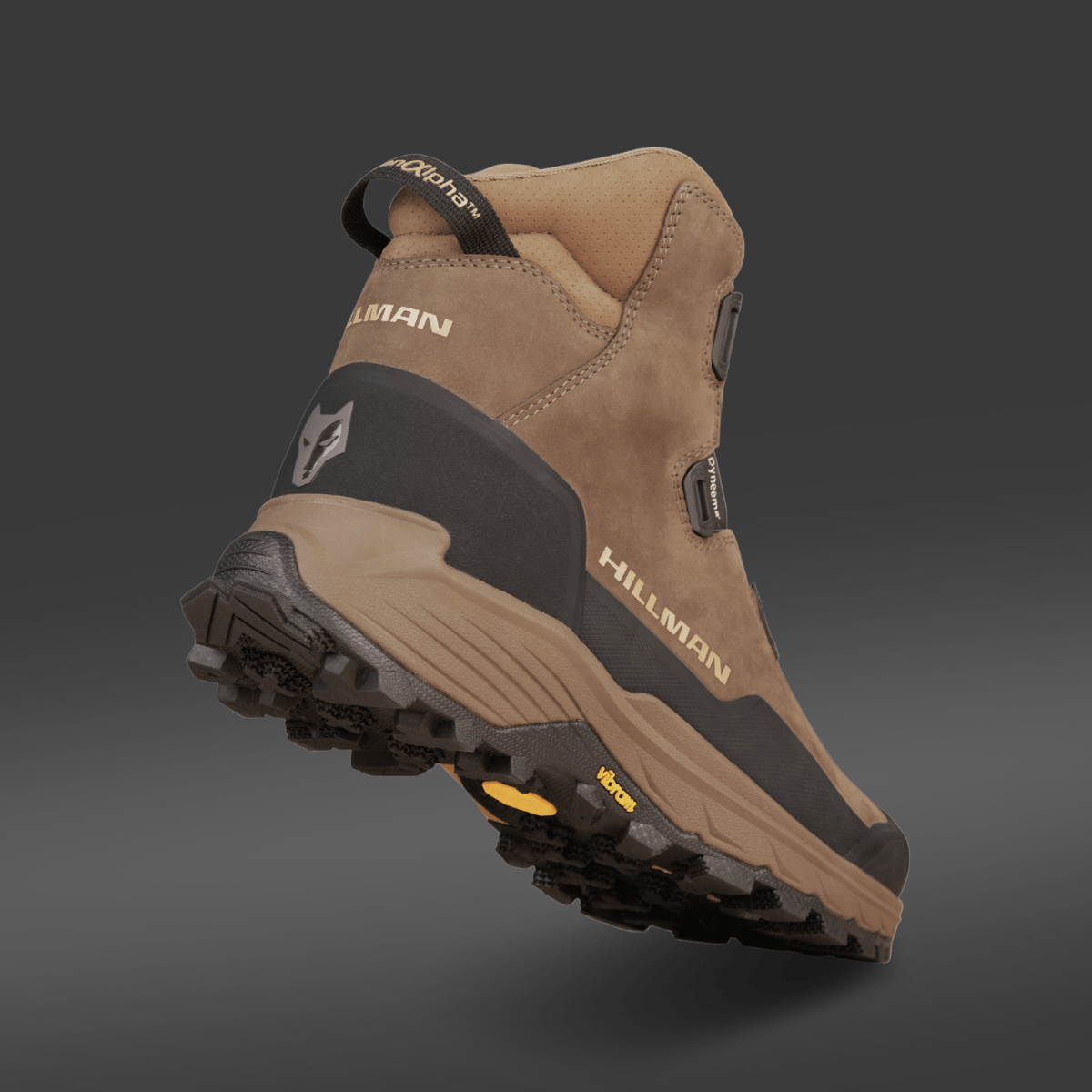
The Aerogel 2.0 is our insulated boot. It's made for late-season sits and cold walks, when you need warmth without a heavy boot. Its product page lists the temperature rating, weight, and sizes of these hunting boots.
The DryHunt is our uninsulated boot. It's made for early season, warm days, and long walks: boots that bring comfort when you cover a lot of ground and want your feet to stay dry.

Hillman is not here to replace the brands you know. We're here to stand alongside them, guided by our own principles of innovation and conservation.
How long do hunting boots last?

It depends on how many miles you put on them and how you treat them. A pair that sees a few sits a season will outlast one that climbs every weekend. Three signs it's time to replace them:
- Your socks come out wet after walking through dew or a creek you used to cross dry.
- The lugs are worn smooth and you slip on ground that used to feel solid.
- Your heel moves no matter how tight you lace them, or the insoles are packed flat.
You can add seasons to a good pair. Knock the mud off after each hunt, let them dry slowly away from a stove or heater, and treat the leather before it cracks.

Frequently asked questions
What are the best hunting boots?
The best hunting boots are the ones made for your hunt. For long cold sits, pick an insulated, tall boot. For walking hunts in warm weather, pick a light, waterproof boot with little or no insulation. For swamps, pick rubber. Then make sure the boot fits with your hunting socks, so your heel stays put and your toes have room.
Who makes the best hunting boots?
No single brand makes the best boot for every hunt. US hunters often name Crispi and Kenetrek for the mountains, LaCrosse and Muck for wet ground, and Irish Setter and Danner for lighter, active hunts. Start with the ground you hunt, then compare the boots built for it, ours included.
What are the best hunting boots for the money?
The best boots for the money are the ones you'll wear for several seasons on the hunts you actually do. A cheap pair that leaks or gives you blisters costs you hunts. Spend on what your hunt needs most, such as warmth for sits or light weight for walking, and skip features you won't use.
Do I need insulated hunting boots?
You need insulated hunting boots if you sit still in the cold. You may not need them for early-season hunts or for hunts where you walk most of the day, because moving keeps your feet warm and insulation makes them sweat. Many hunters own two pairs: one insulated for late season and one light pair for the rest.
How should hunting boots fit?
Hunting boots should fit snug at the heel and roomy at the toes, with the socks you hunt in. Your heel shouldn't lift when you walk uphill, and your toes shouldn't hit the front going downhill. If you need to size up to get toe room, try a wide boot in your normal size.

Boots are only one part of a day in the field. The rest of our footwear and clothing is built for the same seasons. When you know the hunt, pick the footwear to match it.



Share:
Waterproof vs Insulated Hunting Boots: Which To Choose?
Soft Sole Hunting Boots. The Next Step in Silent Hunting 2026