

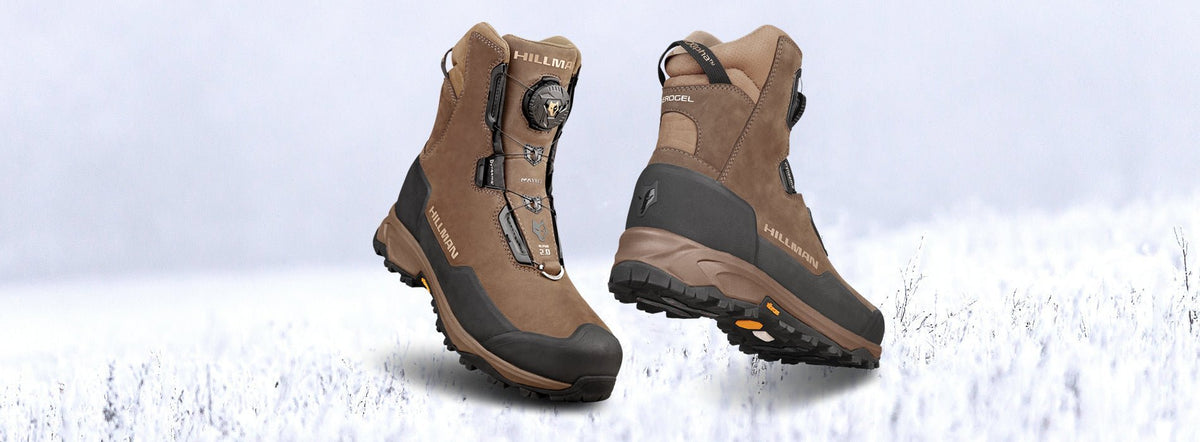
Late Season Hunting Footwear Mistakes: What Breaks Down First in Snow and Slush

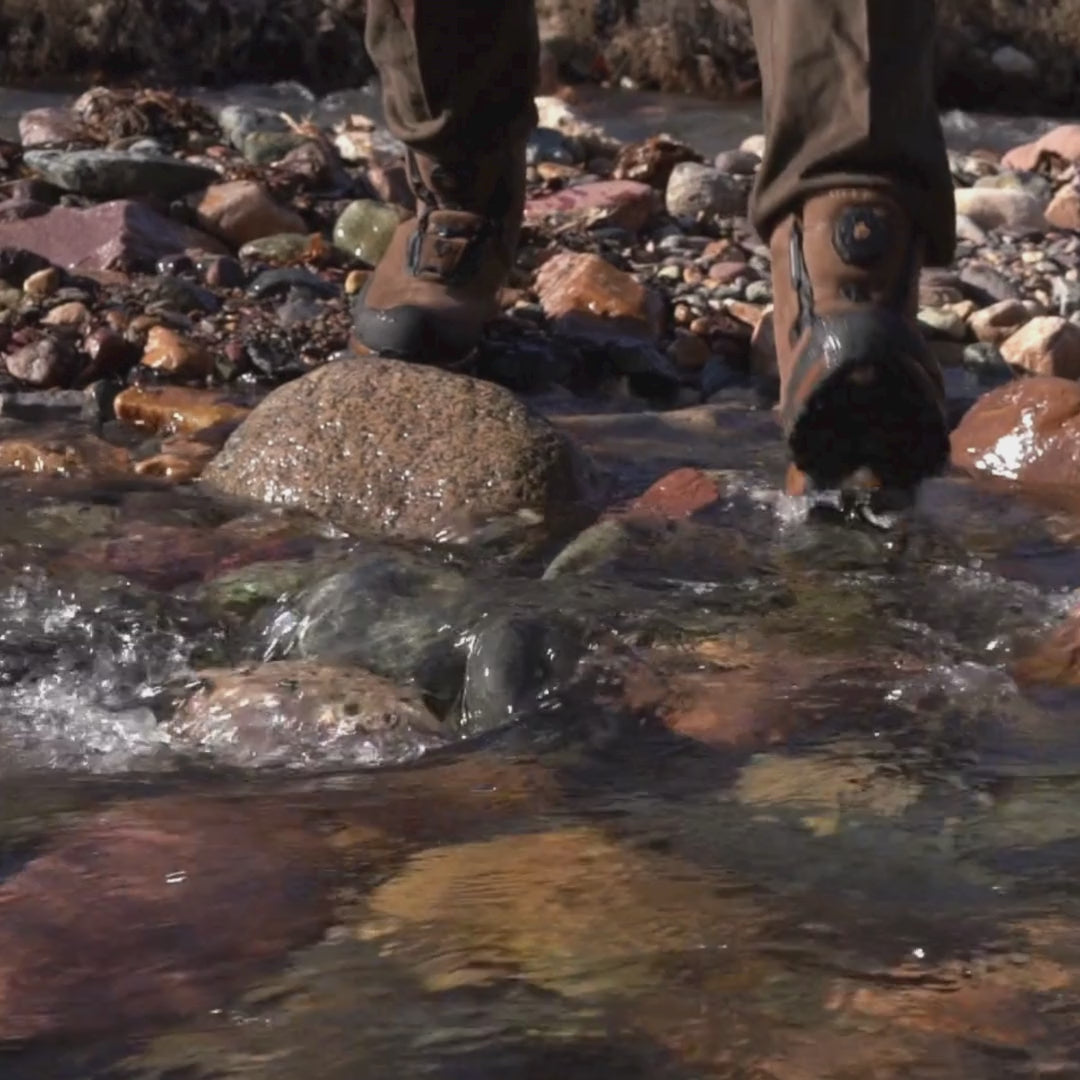
Avoid the most common late-season hunting footwear mistakes. Learn what fails first in snow, slush, and freeze-thaw conditions so you can stay warm, dry, and stable.
Late season is where boot marketing stops sounding impressive and starts meeting weather that does not care. Early in the fall, a lot of hunting boots feel good enough. Trails are drier, creek edges are manageable, and a boot that seems solid during a short walk can pass for the right gear. But once snow starts melting by day, locking up again at night, and turning every approach into a mix of slush, ice, mud, and frozen ruts, weak points show themselves fast.
I have learned that the real problem with late-season outdoor footwear is not usually one dramatic failure. It is a chain reaction. A little moisture gets in. Hunting boot traction starts slipping where the ground looks stable but is not. The boot feels warm for the first hour, then the foot cools down because sweat has nowhere to go. Support feels acceptable on flat ground, then starts feeling loose on uneven terrain under a heavy pack. By the time a hunter notices the pattern, cold feet are already part of the day.
That is why I do not judge best hunting boots by showroom comfort or by how aggressive the sole looks in a product photo. In late-season hunts, I care about what fails first in real conditions. Snow and slush expose bad assumptions. They punish a poor boot selection. And they make it obvious that staying dry, stable, and warm is not one feature. It is a system.
Cold Weather Hunting Boots Fail for Simple Reasons First

The biggest mistake I see with cold-weather hunting boots is assuming that winter performance is only about insulation. People think a cold-weather boot is either warm enough or not warm enough, as if that ends the conversation. It does not. In real cold-weather hunting, boots fail in smaller, quieter ways long before they fully give up.
Sometimes the first sign is not water pouring in. It is a gradual drop in comfort during cold days. The boot feels fine at first, then your toes lose some life because blood flow is being restricted by thick socks and a cramped fit. In other cases, the problem begins underneath you. The sole packs with wet snow, then loses grip when that snow starts to refreeze. Or the upper resists moisture well enough for a while, but repeated flexing in slush starts stressing the weak points around the forefoot.
That is what makes late season tricky. Cold weather is not one condition. It can mean dry, squeaky snow in the morning, soft slush at noon, and hard frozen ground after sundown. A boot that handles extreme cold during a stationary sit may not be the same cold weather boot I want for long miles, broken hills, and repeated elevation changes. The better way to think about the best cold-weather performance is not maximum warmth in theory. It is whether the boot can help keep feet warm, feet dry, and stable as the ground keeps changing.
Hunting Boot Traction Matters More Than Most Hunters Admit

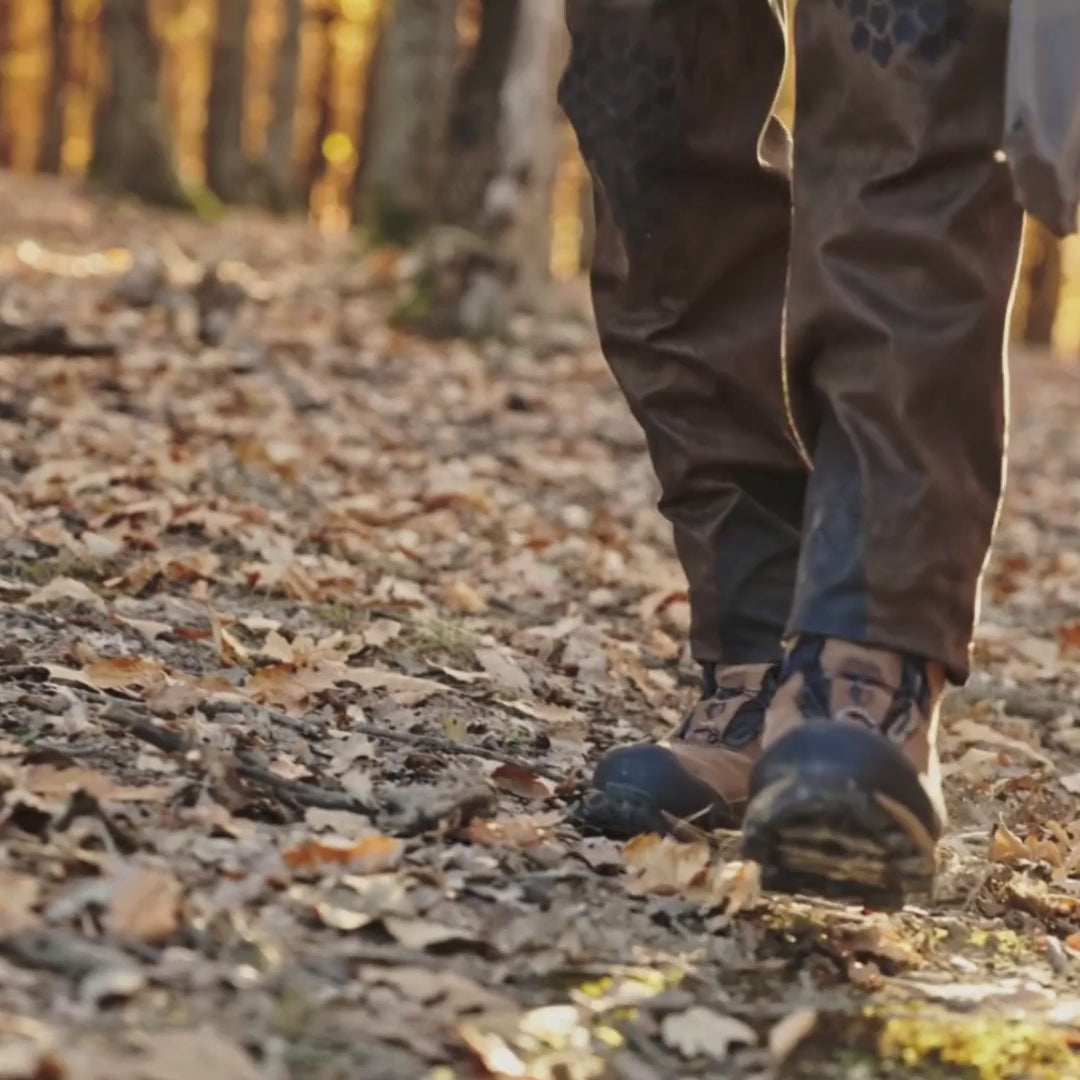
If I had to name the first thing that breaks down most often in snow and slush, I would start with hunting boot traction. That is where many good-looking boots get exposed. Slippery late-season ground is rarely uniform. It is not just snow, and it is not just mud. It is soft top layers over a hard base, wet rock with partial ice, ruts hidden under powder, and slick grass frozen from underneath. A boot that handles dry dirt just fine can feel lost in that mix.
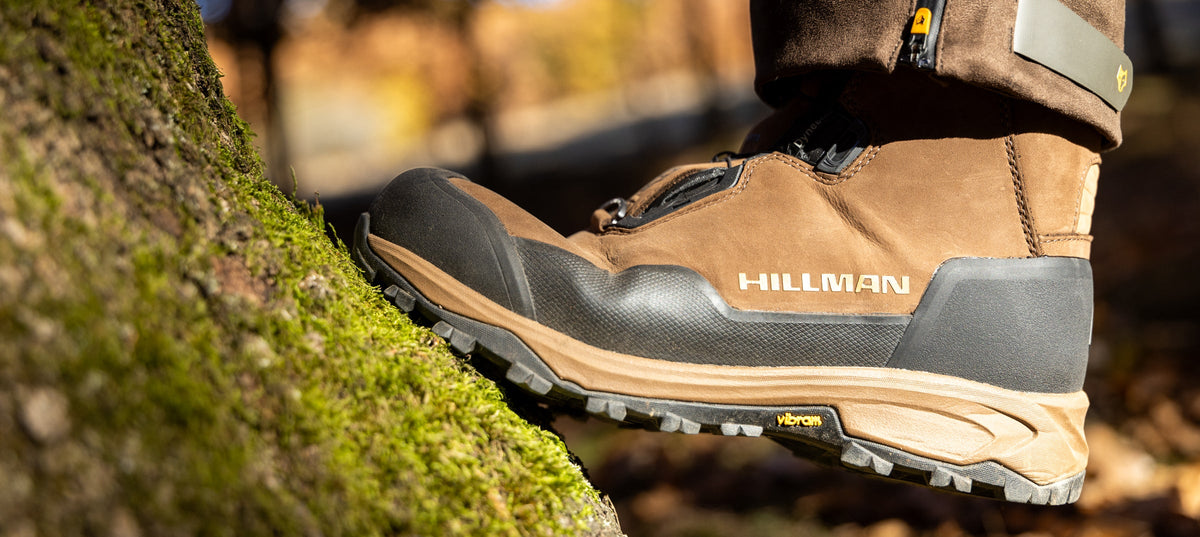
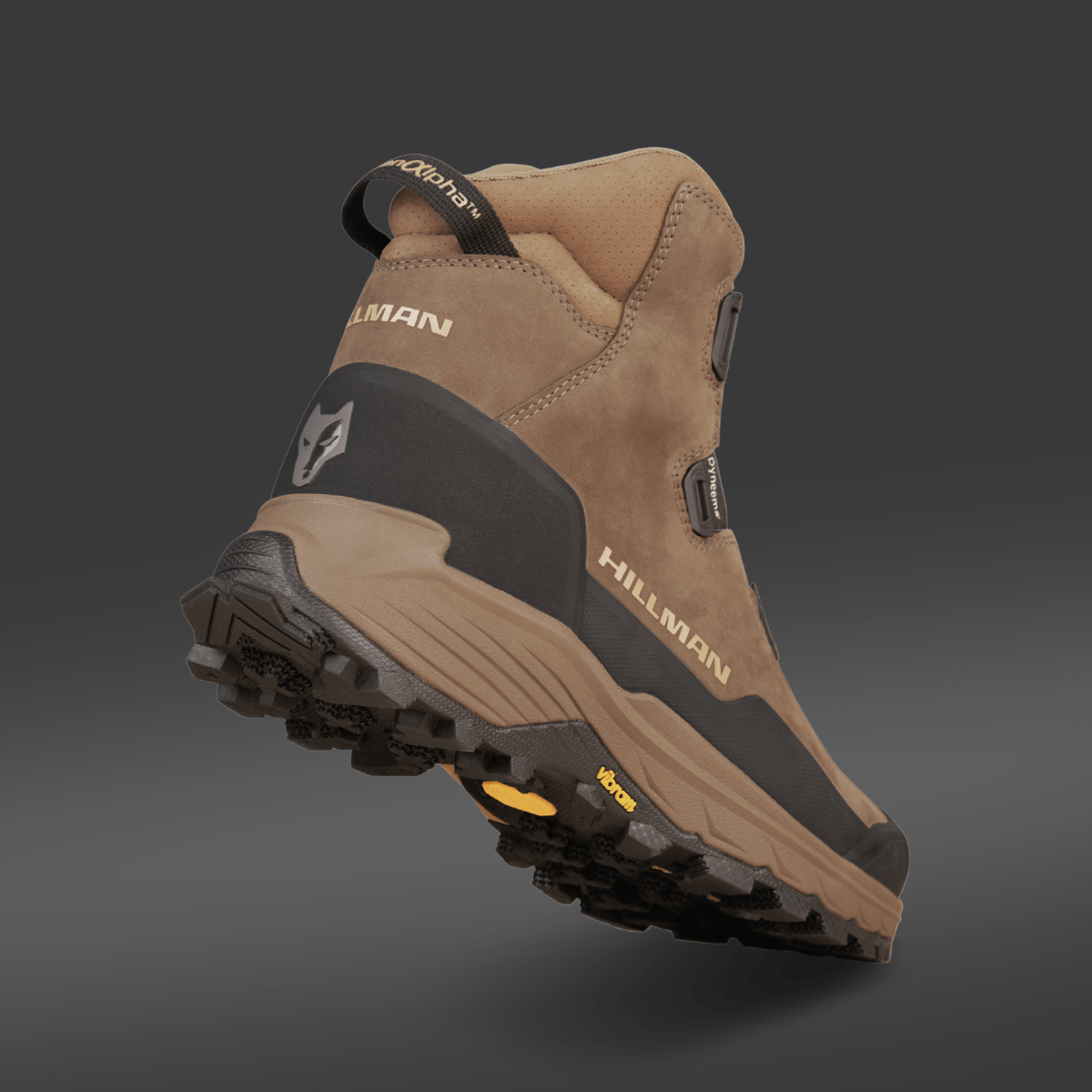
Good hunting boot traction is not only about deep tread. It comes from the way the lugs are shaped, how far apart they sit, the quality of the rubber, and how the sole behaves under pressure. Wide-spaced, aggressive tread can help release mud and snow before the sole turns into one smooth block. Deep, multi-directional patterns help on uneven ground and rough terrain, especially when a hunter is moving downhill with a loaded pack. And sole rigidity matters more than most people think. Too much flex in the wrong country can make a boot feel vague and unstable.
This is also why late-season boot talk should include more than warmth. On frozen trails, great insulation does not save a hunter who keeps sliding. Proper traction reduces wasted movement, reduces fatigue over long distances, and helps protect the ankle when footing turns unpredictable. The farther I go into freezing weather, the less patient I become with a boot that cannot hold its line on mixed ground. For me, excellent traction is not a luxury feature. It is a survival-grade function.
A Cold Weather Boot Can Keep Feet Warm and Still Leave You With Cold Feet

A lot of hunters misread warmth. They assume that if a pair of insulated boots feels hot at first, the problem is solved. But late season warmth is not that simple. I have worn boots that seemed ready for extreme cold and still ended up with cold feet because moisture built up inside, circulation was compromised, or the insulation level did not match the way I was moving.
That is the hidden tension in cold weather hunting boots. If I am active, climbing, crossing draws, and covering long distances, I generate heat. In that case, too much insulation can backfire. I sweat, the inside of the boot gets damp, and once the pace slows down, that trapped moisture starts robbing warmth fast. If I am hunting slower, glassing longer, or staying more stationary, I need more insulation because I am not creating as much heat on my own. Good late season boots account for both the weather and the workload.
Sock choice matters here more than many hunters admit. I trust wool socks because they help with moisture management and warmth better than cheaper options that flatten out or hold too much dampness against the skin. But socks are not magic. Thick socks inside a tight boot reduce blood flow, and reduced circulation turns supposedly warm boots into a problem. That is one of the easiest ways to end up with warm feet for the first hour and numb toes after that.
When I think about a boot for freezing temperatures, I want a perfect balance between insulation, breathability, and fit. Thinsulate insulation has a place. So do premium waterproof membranes. But none of that works as intended if the boot is too tight, the foot overheats early, or the system cannot dry out enough to stay functional through the day. That is where many, many hunters get fooled. A boot can feel impressive in a store and still fail the moment real winter movement begins.
Best Hunting Boots Depend on Hunting Style, Not Hype

I do not believe in one universal answer to best hunting boots, because hunting style changes everything. A boot that makes sense for upland hunting does not necessarily make sense for a late season elk hunt. A hunter walking moderate country at a steady pace may want something lighter and more flexible than a hunter working steep country with a full pack. The mistake is assuming that the best boots are the same for everyone.
That is especially true in late season western hunts. Mountain country asks more from a boot. Support matters more. Sole stiffness matters more. Boot height matters more. Under a heavy pack, a soft and casual-feeling boot often starts to feel uncertain. You feel it on sidehills first, then on descents, then in your feet at the end of the day. A more structured platform, especially in mountain hunting boots, can make a huge difference when the country is rough and the weather is unstable.
By contrast, flatter country and shorter movement windows may reward a different setup. A hunter in and out of wet cover or shallow crossings may appreciate the easy waterproof confidence of rubber boots, especially where the terrain is less technical. But even there, tradeoffs show up. Rubber can feel less precise, less supportive, and more tiring if the miles start stacking up. That is why I think the right boot should never be chosen in isolation. It has to match the country, the pace, the weather, and the hunter.
Ankle Support Becomes Non-Negotiable on Frozen Trails

Late season exposes weak support faster than early season ever will. Snow covers holes. Slush hides ruts. Frozen sidehills turn minor missteps into rolled ankles. In those conditions, ankle support is not just a comfort feature. It protects movement efficiency, helps maintain traction, and keeps fatigue from building too early.
I prefer taller boots when I know I will be moving through snow, wet brush, and unstable ground. More height can help with snow intrusion, water exposure, and stability. A boot in the 9- to 10-inch range tends to feel more secure when the country gets ugly, especially on steep terrain and broken sidehills. That does not mean every hunter needs the tallest boot possible, but late season is rarely when I want to cut support too close.
Support also comes from inside the platform. Stiffer boots with a stable shank usually perform better in mountain country and over tough terrain. They spread load better, reduce foot fatigue, and make a hunter feel less sloppy under weight. For easier country, I can get away with more flex. For rocky ridges, hidden holes, and frozen descent lines, I want more structure. That is where mountain boots often separate themselves from more casual options.
Gore-Tex, Dryhunt and Waterproof Protection Are Only Part of the Story

A lot of hunters lean too heavily on membrane language. They see Gore-Tex or another waterproof technology and assume the question is settled. It is not. In late season, waterproof protection is not about one label. It is about how the whole boot is built and how that build handles repeated wet exposure, freezing temperatures, and flex under movement.
A strong waterproof boot needs more than a membrane. It needs good construction, smart seam placement, reliable bonding where upper meets sole, and materials that do not give up quickly once they are soaked repeatedly. Full-grain leather designs tend to make more sense in late season because they offer structure, weather resistance, and long-term confidence when conditions stay ugly for days.
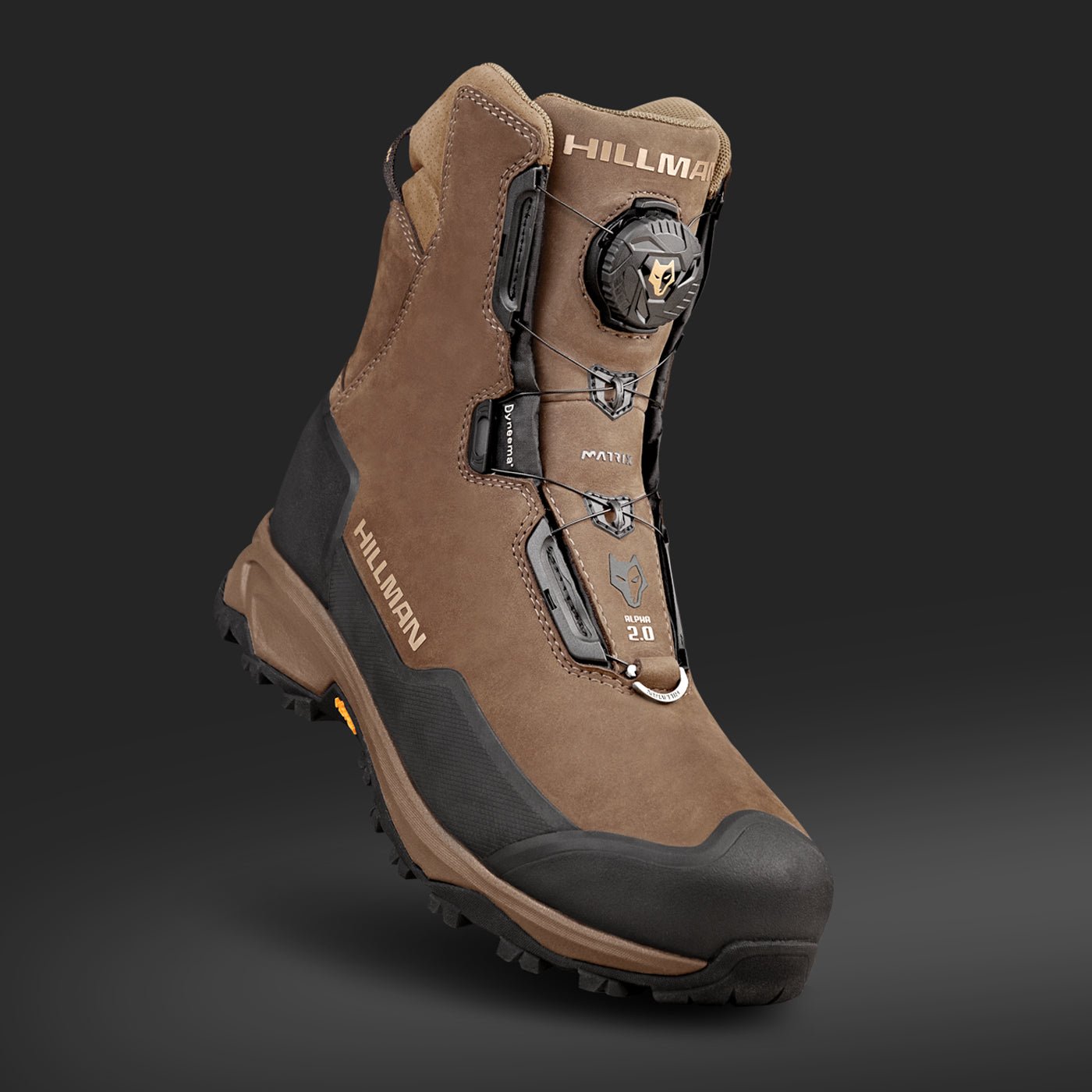
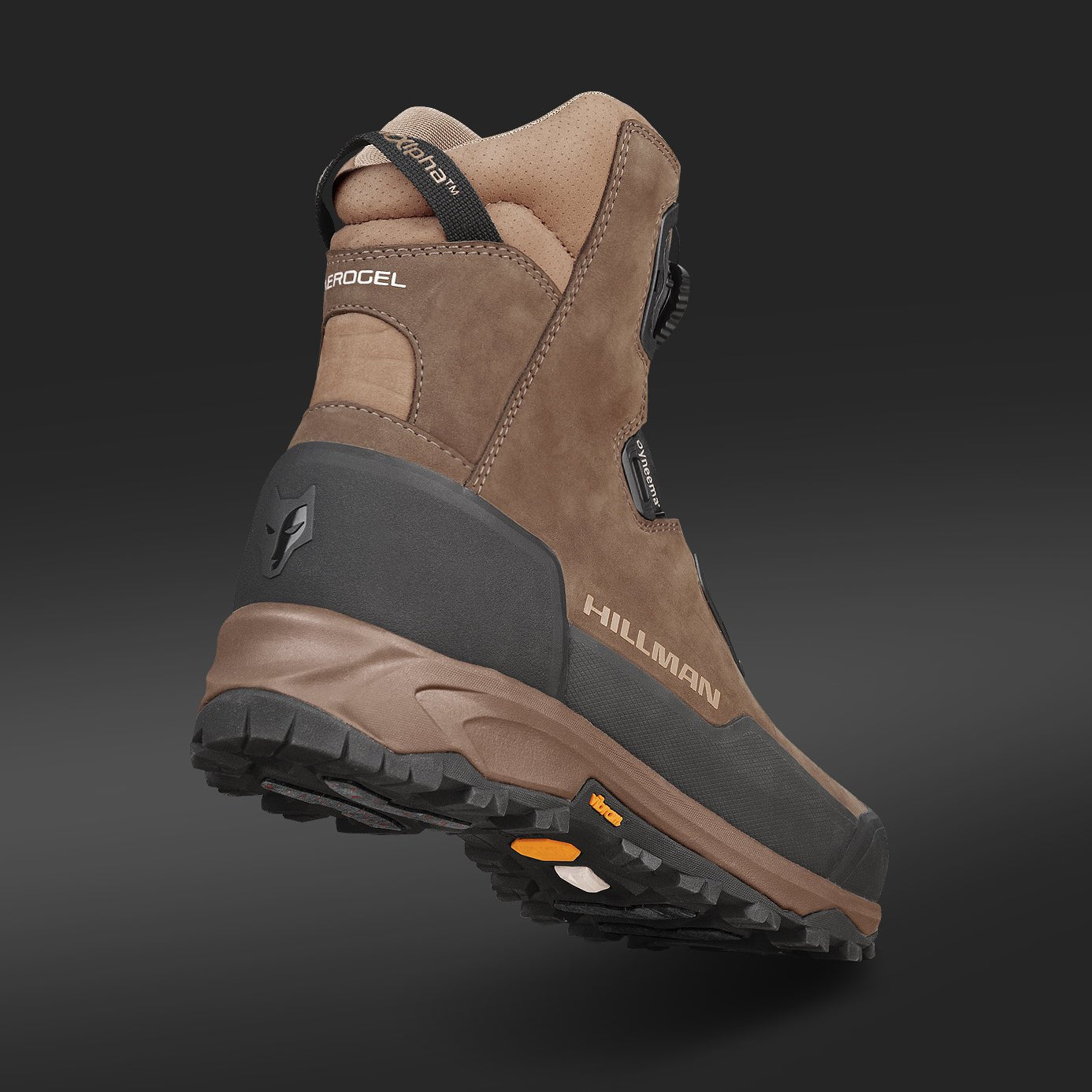
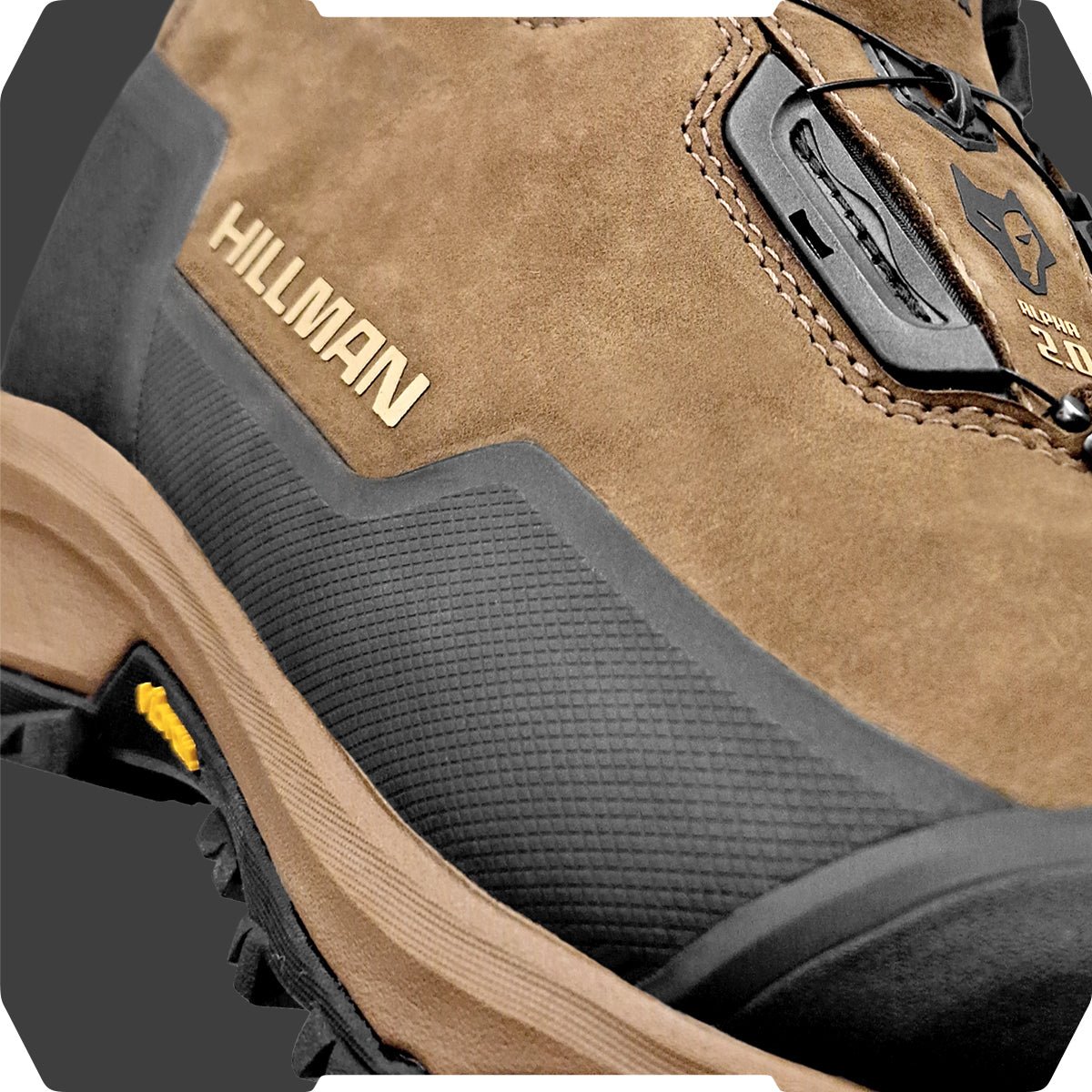
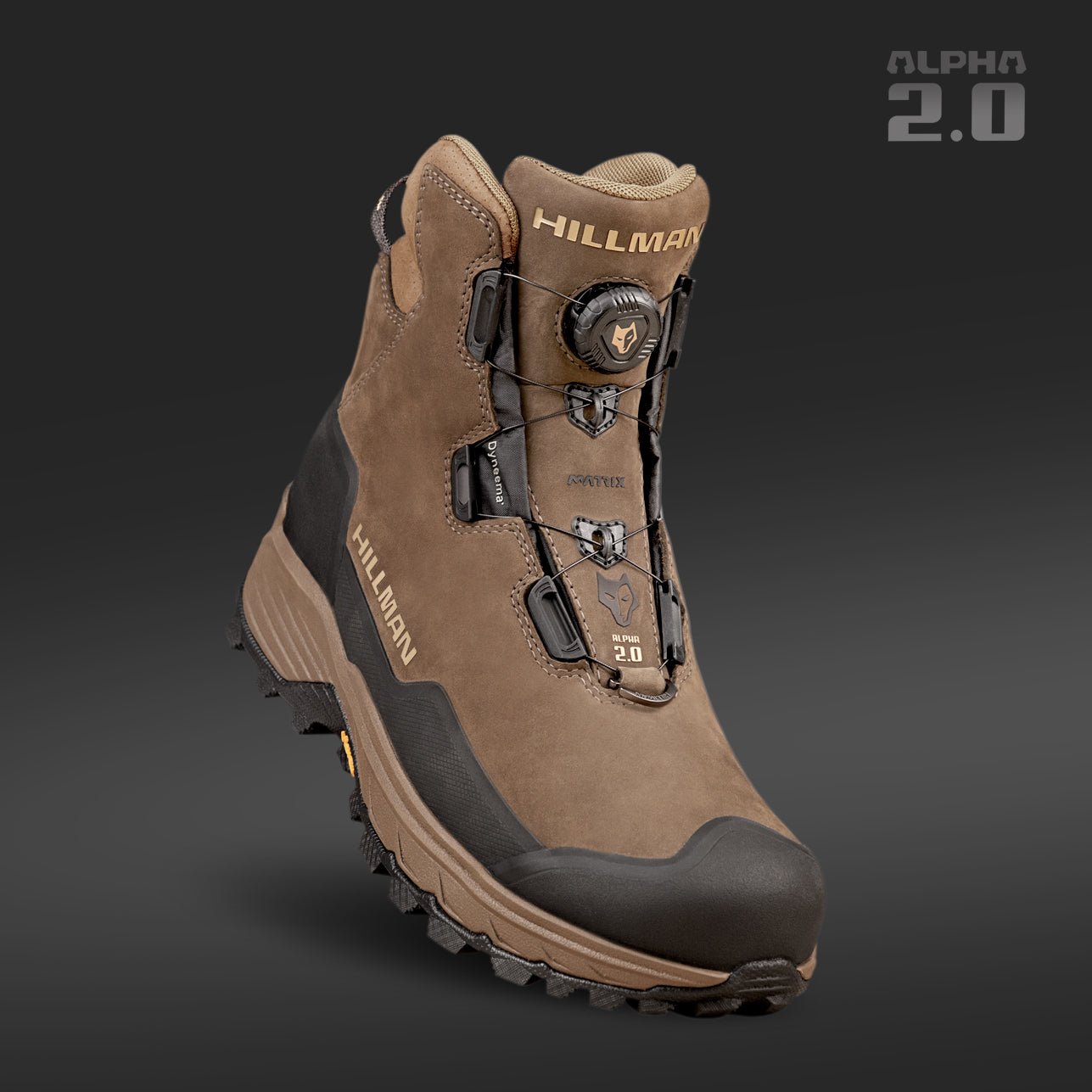
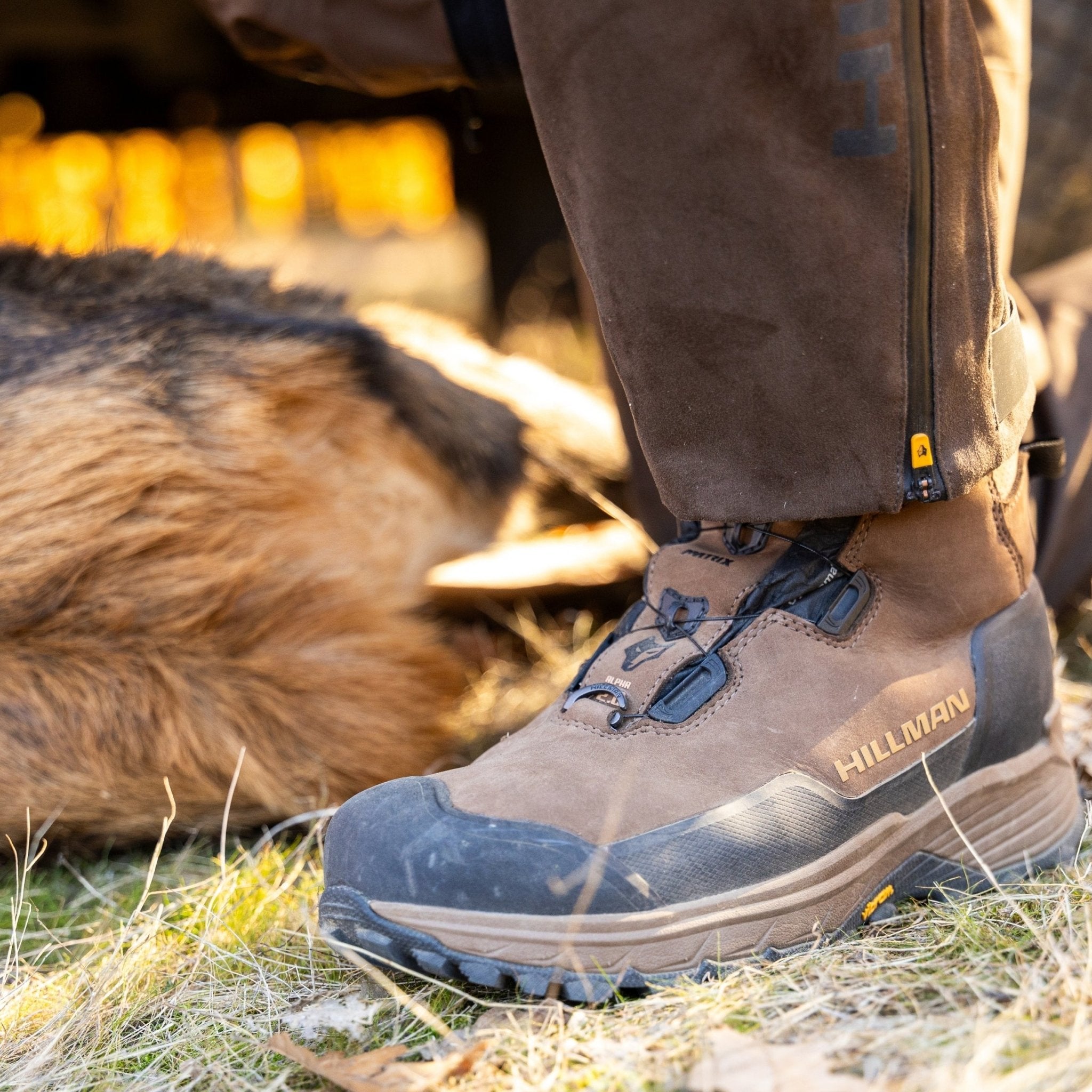
That is the thinking behind the Hillman Dryhunt. It combines a full-grain leather upper with Hillman's own Dryhunt nanomembrane, engineered specifically for hunting rather than borrowed from mountaineering. Where Gore-Tex relies on a slow hydrophilic diffusion process, Dryhunt moves moisture out instantly through 0.5 micron nanopores, stretches in every direction without losing waterproof integrity, and contains no PTFE. The shell matters. The flex points matter. The gusset matters. Premium footwear only earns that label when every part of the system holds up in the field, not just on a product page.
Rubber Boots, Mountain Boots, and the Mistake of One-Pair Thinking

One of the more common late season mistakes is expecting one pair of boots to do just about anything. That sounds efficient, but it often leads to compromise in the worst possible conditions. I am not against simplicity, but I am realistic about tradeoffs.
Rubber boots are useful when water exposure is constant and technical terrain is limited. They are practical, fast, and can be a smart choice for wet lowlands or muddy access routes. But for rough terrain, sidehills, or extended distance, they can feel imprecise. A stiff hiking boot or one of the better mountain hunting boots can be more dependable where support, edging, and stability matter.
That is why I think serious late season hunters should at least consider the logic of multiple pairs over time, even if they do not buy everything at once. A hunter who spends time in mountain country, then switches to flatter wet ground later in the season, is not always served by the same tool. Many boots are marketed as all-purpose. Very few truly are.
The other mistake is buying new boots too close to the hunt. Even a great boot becomes a liability if the fit is still a question, if the break-in is incomplete, or if the foot has not learned how the platform moves under real load. A comfortable boot on a carpeted floor is not the same thing as a proven boot after hours on wet snow and frozen dirt.
Elk Hunting Demands a Different Standard

For elk hunting, late season pressure on footwear is especially unforgiving. In a late season elk hunt, I want more than warmth. I want a boot that can handle changing elevation, sustained cold, and the instability that comes with snow layered over broken ground. That is not only a materials question. It is a fit question, a support question, and a movement question.
In active western country, a hunter is often moving enough to create body heat, which means overheating can be just as dangerous as underinsulation. That is why I do not chase the heaviest possible package by default. I want a boot that helps me stay warm without trapping too much internal moisture. I want it stable enough for the country and strong enough for the load. That matters even more during late season western hunts, where terrain amplifies every mistake.
A boot that works for a tree stand setup may still be useful elsewhere, but I do not assume it will be the perfect pair for every mountain day. The demands are different. The ground is different. The consequences of poor support are different. In real mountain hunting, the right boot is the one that keeps me efficient when the country stops being forgiving.
Late season hunting is often framed as a warmth problem. I see it as a systems problem. When the weather turns hard, what fails first is usually not one headline feature. It is the weak link between traction, support, fit, insulation, and moisture control. And once one of those starts to slip, the rest are not far behind.
That is why I judge best cold weather performance by outcomes. Did the boot help keep warm feet without overheating? Did it maintain great traction when the surface changed every few hundred yards? Did it preserve stability on uneven terrain and rough terrain? Did it hold up with enough durability that I would trust it again tomorrow?
For me, late season confidence is not about hype. It is about knowing what a boot can do when snow turns wet, slush turns slick, and cold turns complicated. That is the standard. And that is what separates premium hunting footwear from boots that only look ready for winter.


Share:
Clothing Choices That Prevent Chafing, Hot Spots and Fatigue
Gear That Earns Trust: Building a Hunting Kit on a Budget