

Do You Need Hunting Gaiters? When They Matter in Wet Grass, Mud, and Snow

Hunting gaiters keep water, mud, snow, and debris out of boots when conditions turn sloppy, cold, and annoying.
Why hunting gaiters stop sounding optional once the ground turns bad
A lot of hunters talk about gaiters like they are some extra piece of gear for people who like buying stuff. Looks useful. Probably not needed. That kind of thinking usually dies the first time somebody walks through wet grass before sunrise, hits a stretch of greasy mud, or gets snow dumped straight into the top of the boots.
That is usually when the whole “do you need hunting gaiters” question gets answered the hard way.
If the ground is dry, clean, and easy, sure, you can skip them and probably never care. But once you are dealing with wet grass, mud, snow, brush, and rough hunting ground, gaiters start making a lot more sense than people want to admit.
What they do is not complicated. Hunting gaiters keep moisture, dirt, pine needles, seeds, burrs, and other debris out of your footwear. They cover the gap between pants and boots, and that gap is where half the garbage on the trail tries to get in. Water runs down pants. Slush falls in. Mud splashes up. Grass soaks cuffs. Tiny junk works into socks. It is always the same story.
They also protect your lower legs, ankles, pants, and the top of your boots from abrasion, brush, sharp rocks, thorns, and all the other rough stuff that keeps rubbing and scraping when you are pushing through ugly ground. Nothing magical. They just keep little problems from stacking up.
What hunting gaiters actually do when brand talk gets stripped away

A decent pair works like a shell over the lower leg and boot top. That is the real job. Keep outside mess out. Keep that upper opening of the boot covered. Add a little protection where pants usually fail.
That matters because a lot of bad conditions all attack the same area. Wet weather runs down pant legs. Mud jumps up around the collar and laces. Snow drops in from above. Brush throws grit, seeds, and debris at every opening it can find. Gaiters close that weak spot before it turns into a bigger problem.
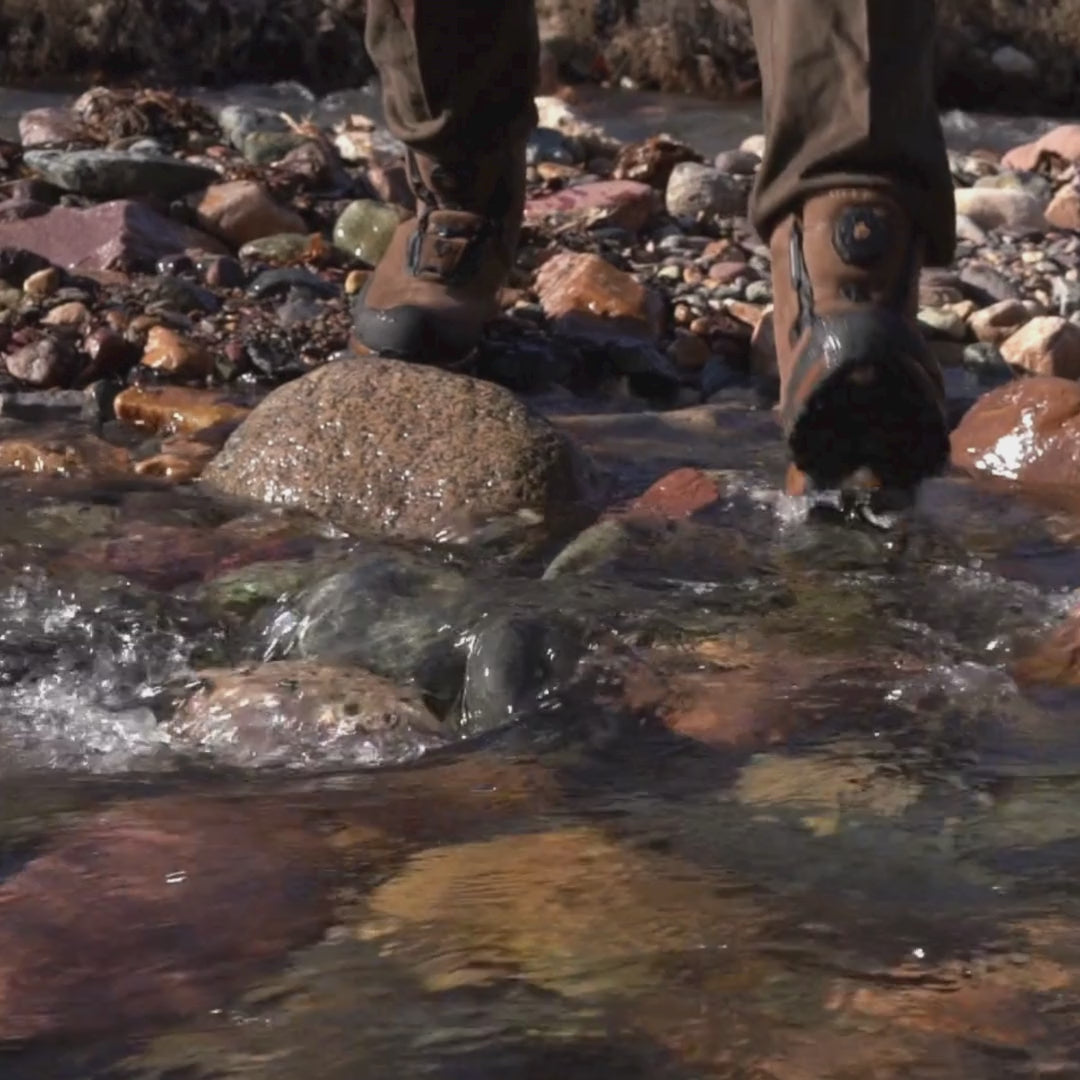
They also help during stream crossings. People trust waterproof boots way too much. Boots can be waterproof all day long, but that does not mean much if water pours in from the top. Gaiters help by protecting the opening, which is exactly where a lot of boots get exposed.
They can also add a little extra warmth in cold weather. Not enough to replace warm socks or insulated boots, but enough around the ankles and lower legs that you notice it when you are standing in slush, wind, or shallow snow.
Wet grass is one of the best reasons to wear gaiters

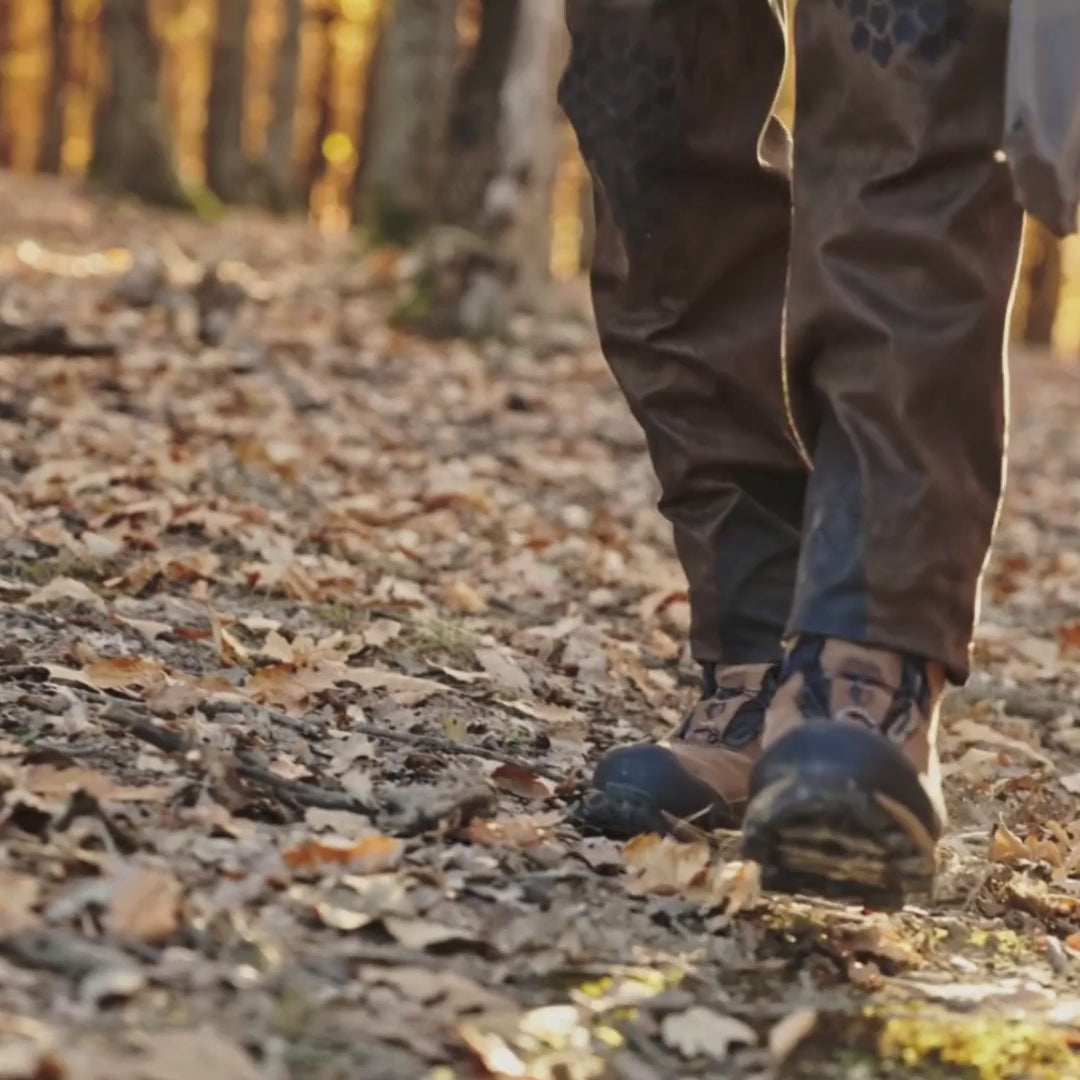
People love treating gaiters like snow gear first. Fine. But wet grass is where a lot of hunters finally understand the point. Morning dew looks harmless until it is not. You walk through shin-high grass for fifteen or twenty minutes and suddenly your lower pants are soaked. Then the wet keeps moving. Pants stay wet. Socks start getting damp. Boots feel clammy. Feet get colder than they should. And all of that started because of grass.
That is exactly where boot gaiters earn their keep. They stop wet grass and wet brush from dumping water straight onto the lower pants and boot opening. They help keep feet dry longer, and they matter in warm weather and early season just as much as they do later in the year.
That is also why shorter gaiters exist. Not every hunt needs tall, full length coverage. Sometimes the real issue is low wet grass, light dirt, seeds, pine needles, and little bits of debris. In that kind of setup, shorter gaiters or a mid calf style can do the job without trapping as much heat.
Muddy trails make the case fast

Mud has a way of wrecking simple walks. It cakes onto boots, packs into laces, smears cuffs, adds weight, and makes everything feel dirty and sloppy. Gaiters help in muddy terrain because they keep a lot of that mess off the upper boot and lower legs. One stretch of bad trail can make the lower half of your setup look trashed. A solid pair of gaiters cuts down on that. They also help keep dirt and grit from working into your footwear. That sounds like a small thing until you are stuck walking for hours with junk rubbing around inside the boot. And that is the point with gaiters in general. They do not always fix huge problems. They stop a bunch of smaller ones before they become huge.
Snow is where full length gaiters quit being negotiable

Snow makes the benefit obvious because it is harder to ignore. Once snow gets over the collar of the boot, things start going bad in a hurry. Wet socks. Cold feet. Constant irritation. Then the rest of the hunt turns into one long lesson in why you should have covered the boot top better.
Full length gaiters are built for exactly that. If you are walking through snow, kneeling in it, or post holing through drifts deeper than a few inches, they stop snow from dropping into the boot and help preserve a little warmth around the lower legs.
Post holing in snow deeper than 4 inches is the sort of thing that makes gaiters stop feeling optional. Same goes for crusty snow, wet snow, slushy edges, and any condition where your pants and boots keep getting hammered over and over.
That is why taller gaiters show up so often in harsher country, mountaineering, and ice climbing. Hunting is a different use, obviously, but the logic is the same. More coverage helps when the terrain gets uglier.
Full length gaiters vs shorter gaiters is mostly common sense
This does not need to be complicated. Full length gaiters are better for deep snow, soaked brush, wet environments, rugged terrain, and fall or winter hunts where both pants and boots need more protection. If the ground is nasty and the weather is worse, taller gaiters usually make the better call.
Shorter gaiters are better for warm weather, light hiking, early season hunts, and situations where the main problem is light debris, dirt, seeds, low wet grass, or pine needles getting into shoes or boots. They breathe better, feel lighter, and do not get as hot.
That is the trade. Taller gaiters give more coverage. Shorter gaiters are easier to live with when the conditions are not brutal.
Gaiters are available in two main lengths: full-length and short-length. Full-length gaiters usually make more sense in fall and winter hunts. Shorter gaiters fit summer and early September hunts better.
Stream crossings and wet conditions expose the weak point in boots

A lot of people act like waterproof boots solve everything. They do not. They still have an opening at the top, and water loves that opening. That is why gaiters matter in wet conditions. They help prevent water from entering during stream crossings, wet brush, soaked grass, slush, and repeated contact with wet vegetation. They do not make boots invincible, but they can stop a lot of water that would otherwise run in from above.
Water resistant gaiters can be enough for lighter moisture and occasional exposure. Fully waterproof gaiters make more sense when the hunt includes repeated contact with soaked brush, bad weather, stream crossings, slush, or snow. That is where better waterproofing earns its place.
Fit matters more than whatever the packaging says
A bad fit screws up the whole thing. Gaiters should fit snug around the calf without being too tight. Too loose and moisture and debris get in. Too tight and they become irritating fast, especially on longer hikes. The whole point is getting a proper seal around the lower leg and boot.
The bottom edge needs to sit securely around the boot. The top should close firmly around the calf or below the knee depending on the design. If the fit is sloppy, the gaiters shift, sag, ride up, and start doing half the job.
A secure fit matters more than marketing words. If they stay put while hiking, crawling, pushing through brush, and climbing rough ground, they are doing their job.
Closure systems are useful, but some are louder or more annoying than others

Most gaiters use some mix of velcro, a velcro closure, zippers, buckles, drawstrings, boot straps, instep straps, or adjustable stirrups. All of that exists for one reason. Keep the gaiter sealed and keep it from shifting around.
Instep straps matter because they hold the lower edge down around the boot. A decent boot strap under the sole helps keep tension where it belongs and stops the gaiter from creeping upward. Adjustable stirrups can help with fit too, though extra hardware can sometimes snag on brush.
Then there is the noise issue. Velcro works, but it is not quiet. Rip it open at the wrong time and everybody within earshot probably knows about it. Zippers are usually quieter, but they can cost more and occasionally bind up.
So yes, closure systems matter. They are also one of the few areas where gaiters can be mildly irritating.
Materials, waterproofing, and breathability are always a tradeoff
Most gaiters are made from nylon or polyester. Some are water-resistant. Some are fully waterproof. Better ones usually use abrasion-resistant fabric because rough terrain, rocks, brush, and debris chew through cheap material pretty fast.
Some also use breathable membranes so sweat vapor can escape while outside moisture stays out. That matters in a real way. In warm weather, heavy waterproof gear can feel stuffy and sweaty. In cold weather, snow, wet brush, and soaked ground make that extra barrier worth having.
That is why fabrics like Dryhunt or Gore-Tex show up so often in premium waterproof gaiters. Better designs try to balance waterproofing with breathability, because nobody wants lower legs cooking in trapped sweat all day either. Water-resistant models are often enough for light dirt, mild moisture, and wet grass. Fully waterproof models are the better call when you know the hunt involves repeated soaking, stream crossings, snow, and real wet conditions.
Brand examples show how different gaiters are built for different jobs

You do not need a specific brand to understand gaiters, but examples make the differences easier to see. Outdoor Research Rocky Mountain High gaiters are a good example of a lighter setup. They are water-resistant and give full-length protection from mud, snow, and brush without going full heavy-duty. That kind of Outdoor Research Rocky Mountain style works well in mixed conditions.
Outdoor Research Crocodile gaiters lean much more rugged. More protection, better for deeper snow, rougher terrain, and harsher weather. Not built for the same kind of use as a lighter trail running style gaiter, and that is the whole point.
Sitka Stormfront gaiters use Gore-Tex and are built for wet environments where waterproofing matters more. Black Diamond Frontpoint gaiters are waterproof and meant to keep feet dry in ugly conditions. Forloh AllClima gaiters are lightweight while still offering solid waterproof protection. KUIU Kutana Storm gaiters are another lightweight option for wet country. First Lite Brambler gaiters are known for decent comfort and solid moisture protection. Dan's Hunting Gear gaiters are lightweight, waterproof, and built to keep legs dry in wet conditions.
That list is useful for one reason. It shows that gaiters are not all the same. Some lean light and breathable. Some lean more protective. Some are better for wet grass and brush. Others make more sense in snow, rough country, and harsher weather.
Are gaiters worth it for every hunter

No. Not every hunter needs them. If you mostly hunt dry ground, have short walks in, and rarely deal with wet grass, mud, snow, debris, or rough brush, gaiters may not get used much. That is just reality.
But if you hunt in wet weather, muddy trails, wet brush, deep snow, rough terrain, or ground full of moisture and junk, they are easy to justify. They help keep feet dry, pants cleaner, boots less packed with crud, and lower legs better protected.
They are also usually lightweight enough that a decent pair does not feel like some massive burden. A lot of hunters assume gaiters are bulky and annoying by default. Some are. Plenty are not.
How to choose the right pair without making it harder than it needs to be

Start with the terrain. Wet grass, light dirt, pine needles, and small debris usually point toward shorter gaiters or a lighter mid calf design. Deep snow, stream crossings, wet brush, rugged terrain, and harsh environments point toward full length gaiters.
Then look at temperature. In warm weather, lighter water resistant models breathe better and feel less suffocating. In colder weather or wetter hunts, waterproof gaiters with stronger coverage make more sense. After that, focus on fit and closure. You want a snug seal, a secure fit, solid instep straps, a decent boot strap, and a closure that stays put. Not fancy. Just functional.
Also think about noise. Velcro can be loud. That matters more for some hunters than others. Think about how much hiking you do, whether you wear boots or shoes, and whether your hunting style is more fast movement or more slow grinding through brush and wet cover.
There are also specialty options. Some gaiters are chemically treated to repel ticks. Some have inserts meant to help protect against snake bites. Some are treated with insect repellent to cut down on bug issues. In places with ticks, snakes, cactus, brambles, or thick nasty brush, those features stop sounding gimmicky pretty fast. At the end of the day, gaiters are one of those gear items people dismiss when conditions are easy. Then the ground turns wet, muddy, snowy, brushy, or rough, and suddenly they make perfect sense.


Share:
Best Hunting Socks for Cold Mornings, Wet Boots, Long Miles
How to Pack a Hunting Backpack for Day Hunts